
Table of Contents
Missing a tooth, or several, can change how you eat, speak, and smile. Many of our patients tell us they have been avoiding photos or hiding their smile for years.
At Orange Periodontics and Dental Implantology, we replace missing teeth with dental implants that look, feel, and function like your natural teeth. Our specialists serve patients in Orange, Anaheim, Fullerton, Tustin, and throughout Orange County, and we explain every step so you know what to expect before we begin.
Medically reviewed by Cliff Lee, DMD, MS, Specialist in Periodontics & Implantology | Last reviewed: November 2026
Why Choose a Specialist in Periodontics for Your Dental Implants?
A dental implant is a surgical procedure performed in your jawbone and gums. Its long-term success depends on the health of both.
Some dentists place implants after a short continuing-education course. A Specialist in Periodontics has completed an advanced, multi-year surgical residency focused on gums, bone, and dental implants.
That training matters most when a case is not straightforward:
- Bone loss after a tooth has been missing for years
- Bone grafting and sinus lifts to rebuild support for an implant
- Gum health concerns that affect how long an implant will last
- Complications such as peri-implantitis, a gum and bone disease that can affect implants
Meet Your Implant Specialists
Dr. Cliff Lee earned his dental degree at Harvard School of Dental Medicine. He completed his surgical residency in Periodontics and Implant Dentistry at UCSF, where he also earned a Master of Science in Oral and Craniofacial Sciences.
His clinical focus is bone and tissue regeneration around teeth and dental implants. Dr. Lee has published in peer-reviewed journals and continues a research position at Harvard focused on innovations in dental implants.
Dr. Sepi Lee earned her dental degree, completed her surgical residency in Periodontics and Dental Implantology, and earned her master’s degree, all at UCSF. She believes the foundation of care is trust and compassion, and she builds long-term partnerships with her patients.
What Are Dental Implants? (The Gold Standard of Tooth Replacement)
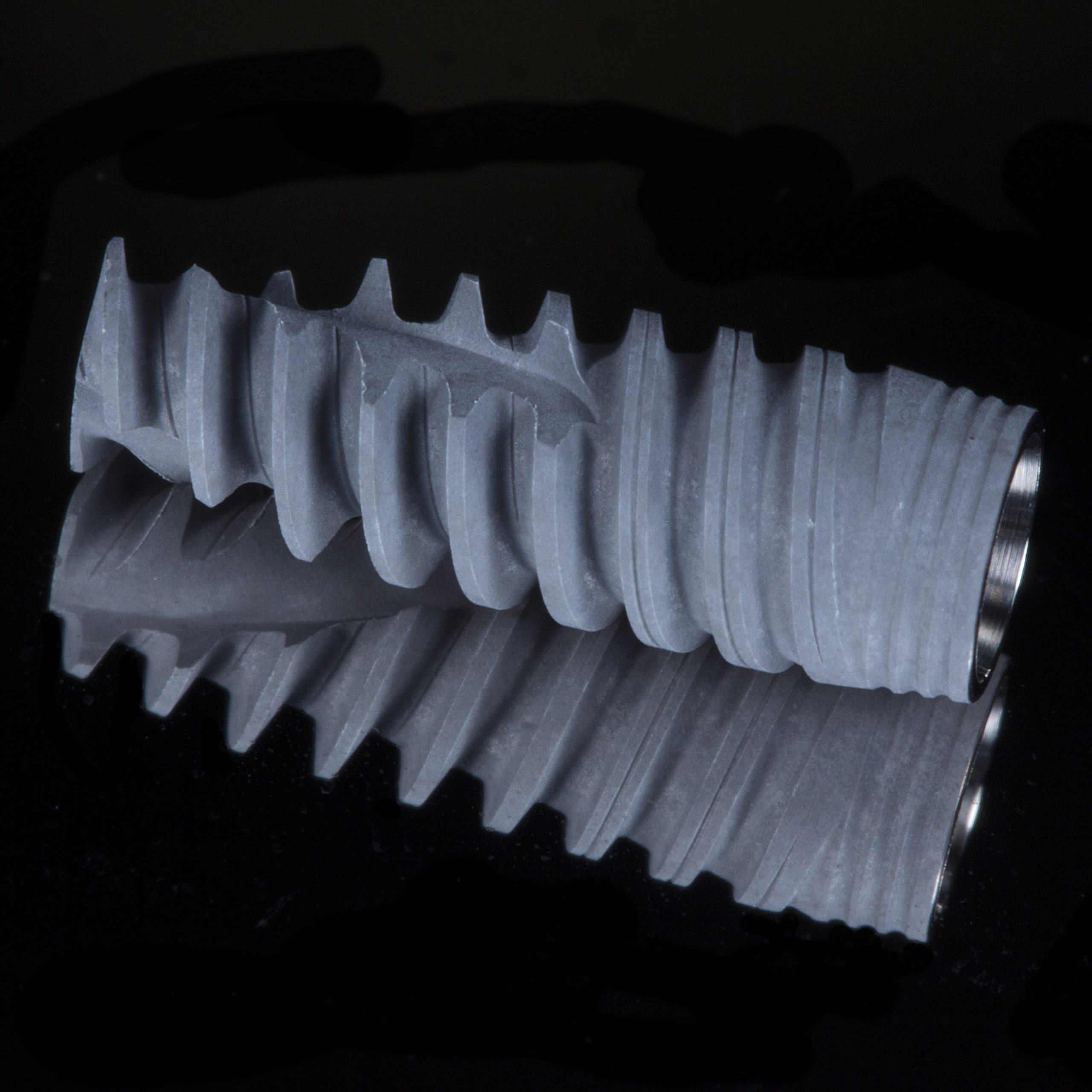
A dental implant replaces the root of a missing tooth. It has three parts:
- The implant: a small titanium or zirconia post placed in the jawbone
- The abutment: a connector that attaches to the implant
- The crown: the visible, natural-looking tooth on top
Titanium bonds with living bone in a process called osseointegration. This is what makes an implant feel stable, like a natural part of your mouth.
We use only Nobel Biocare and Straumann implants. They are two of the most established and best-researched implant systems in the world, and both manufacturers back their implants with warranty programs.
Benefits of Dental Implants
Replacing a missing tooth is about more than your smile. An implant replaces the root, and that is what sets it apart from other options.
- Protects your jawbone: Bone can shrink after a tooth is lost. An implant gives the bone something to hold on to, which helps preserve it.
- Eat what you enjoy: Implants are securely anchored, so they do not slip or shift when you chew.
- Speak and smile with confidence: There is no worry about teeth moving or clicking.
- Built to last: With good hygiene and regular maintenance, implants can last many years, often decades.
- Simple to care for: Implants cannot get cavities. You clean them with regular brushing and flossing, plus professional checkups.
Your Dental Implant Options
There is no single “best” way to replace teeth. These are the four main options we offer, and the right one depends on how many teeth you are missing and how much bone you have.
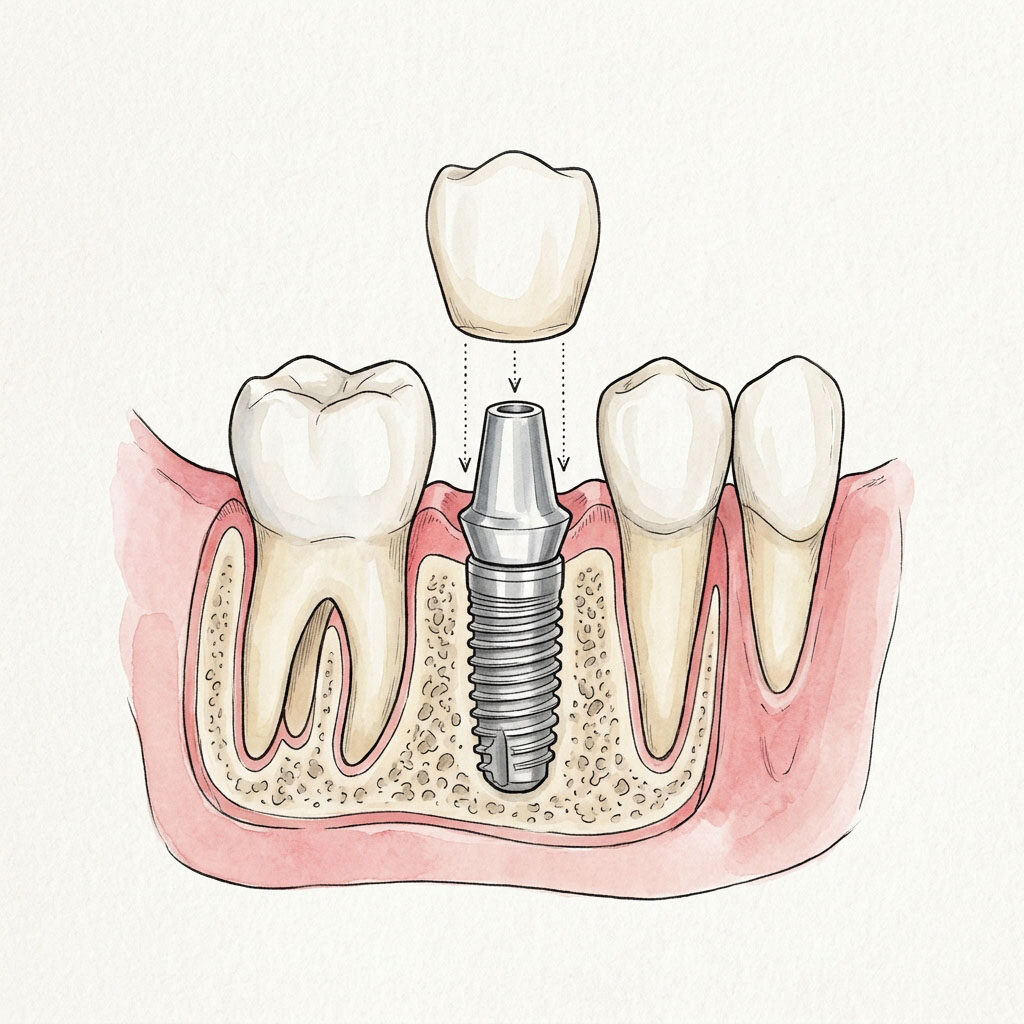
Single Tooth Replacement
One implant and crown replace a missing tooth without altering the healthy teeth beside it. It looks, feels, and cleans like a natural tooth, and we can often place a same-day temporary tooth. You need enough bone, though grafting can help.
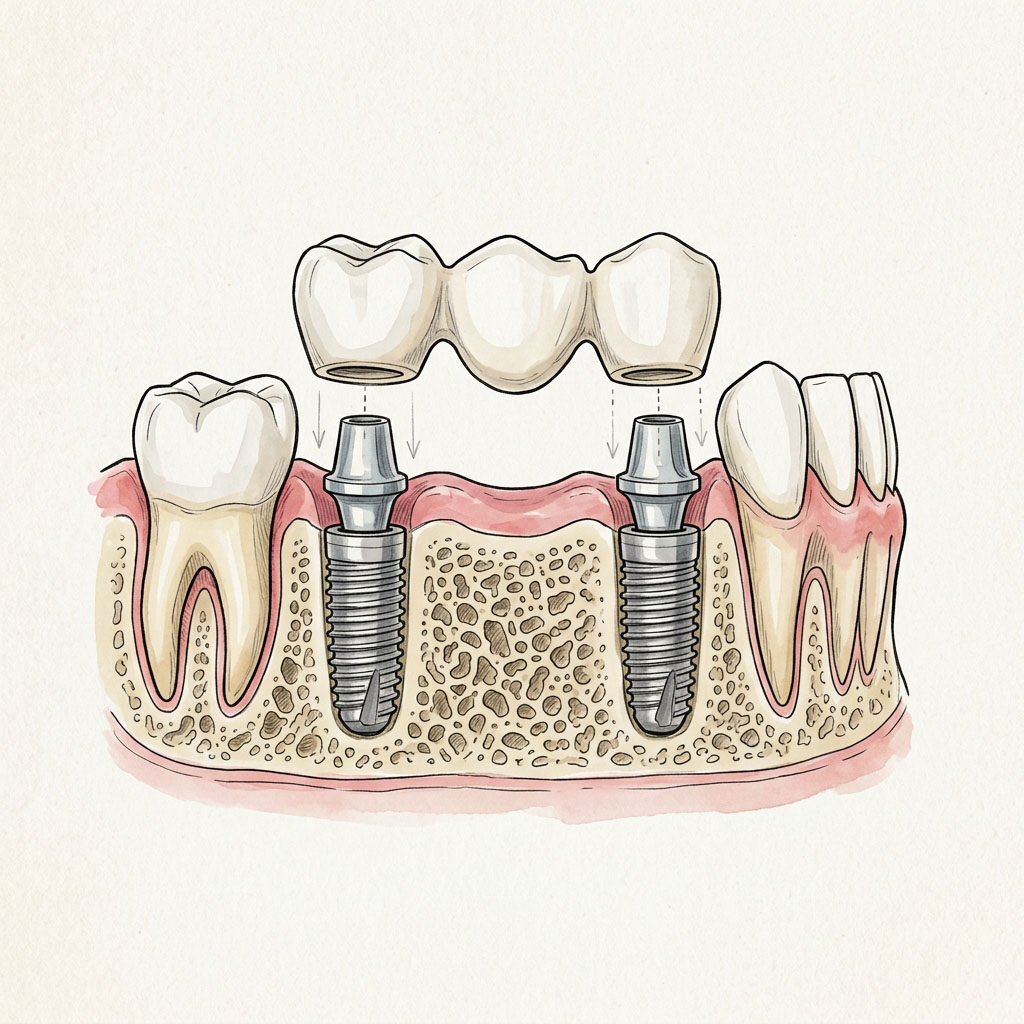
Multiple Teeth & Implant-Supported Bridges
Two or more implants can anchor a fixed bridge across several missing teeth, so you do not need one implant per tooth. It keeps treatment efficient and your bite stable. The area under the bridge needs careful daily cleaning.
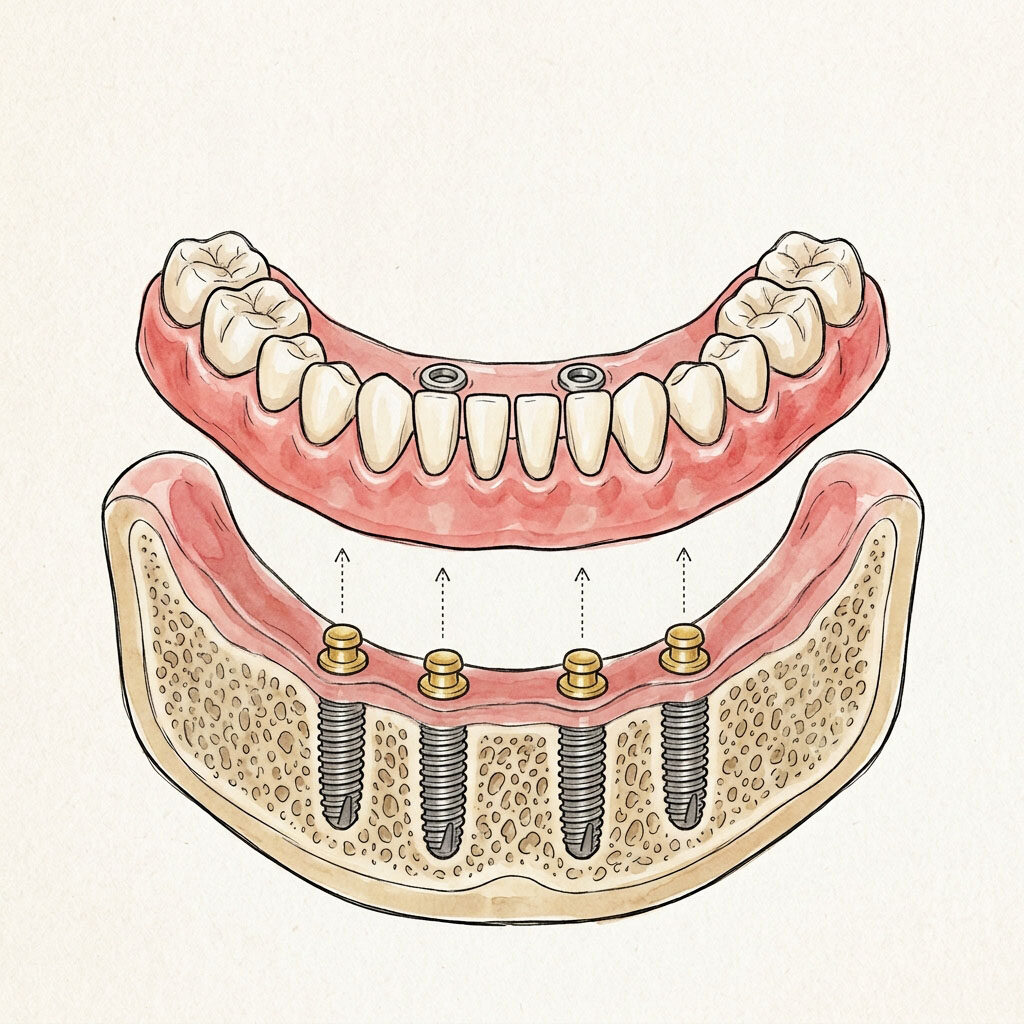
Implant-Supported Removable Dentures (Overdentures)
A removable denture that snaps onto, often, two to four implants is far more stable than a regular denture and easy to take out and clean. It suits patients missing all their teeth who want a lower cost. The attachments need periodic replacement.
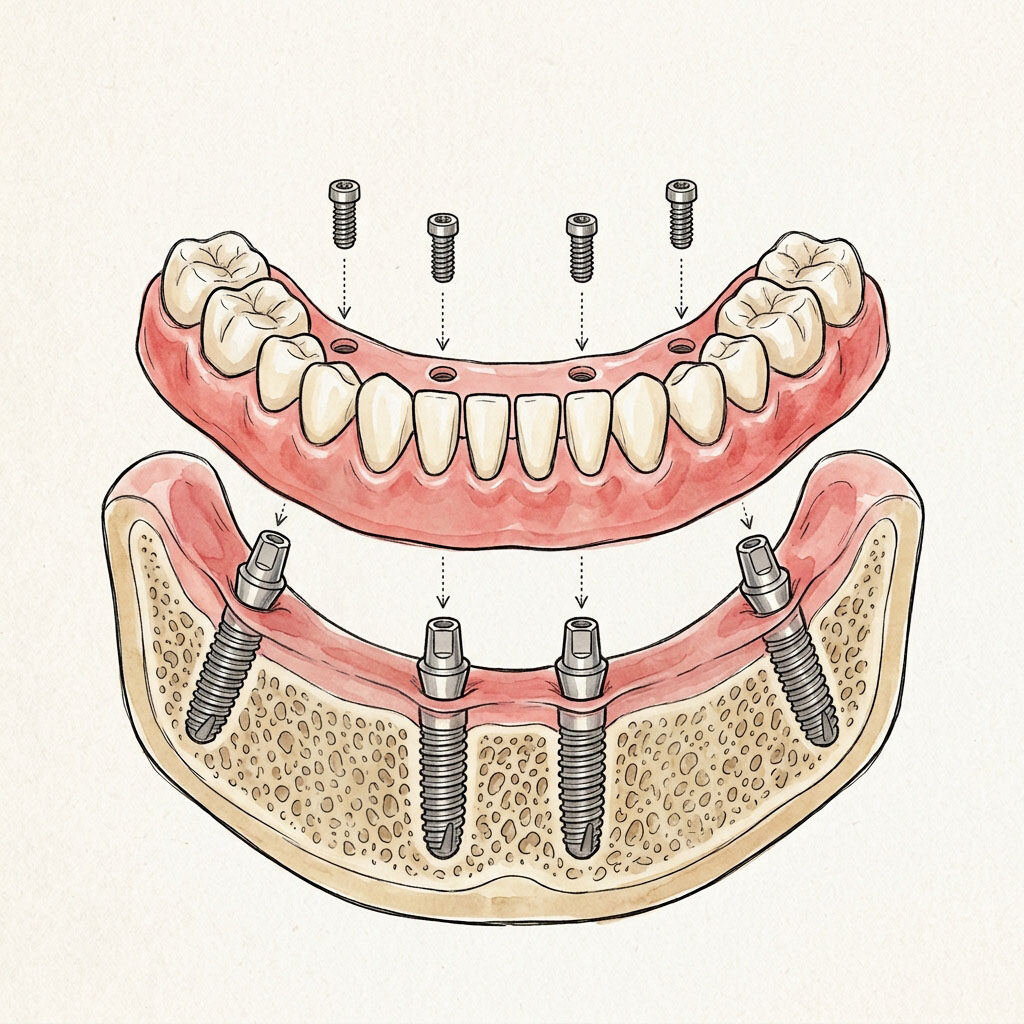
Full-Arch / Full-Mouth Rehabilitation (All-on-X)
Our All-on-X approach fixes a full arch of teeth to multiple implants, replacing the movement and uncertainty of dentures. It feels closest to natural teeth, with same-day temporary teeth in suitable cases. It costs more and needs enough bone, or grafting.
Which Dental Implant Option Fits You?
The right choice depends on how many teeth are missing, your bone, your health, your budget, and whether you prefer fixed or removable teeth. As a quick guide:
- Missing one tooth: a single implant
- Missing several teeth in a row: an implant-supported bridge
- Missing all your teeth, and want a stable, lower-cost option: an implant-supported denture
- Missing most or all of your teeth, and want teeth that stay in: a fixed full arch
Not sure? We review your 3D scan with you and recommend the simplest option that meets your goals. In some cases, patients begin with an overdenture and later move to a fixed arch when their bone allows.
We place the implants and coordinate with your dentist or denture provider, who makes the final teeth or denture.
Before and After Photos
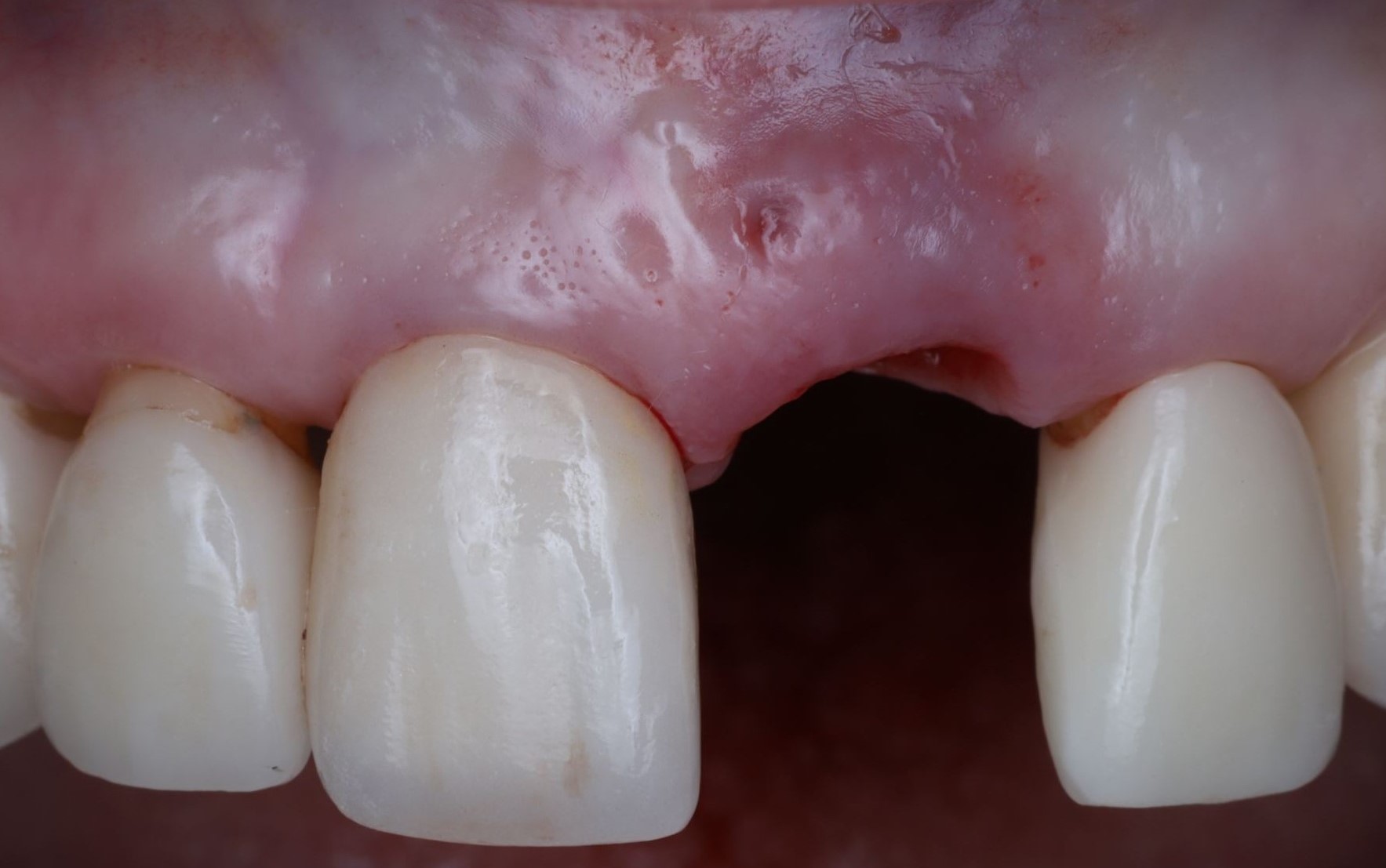
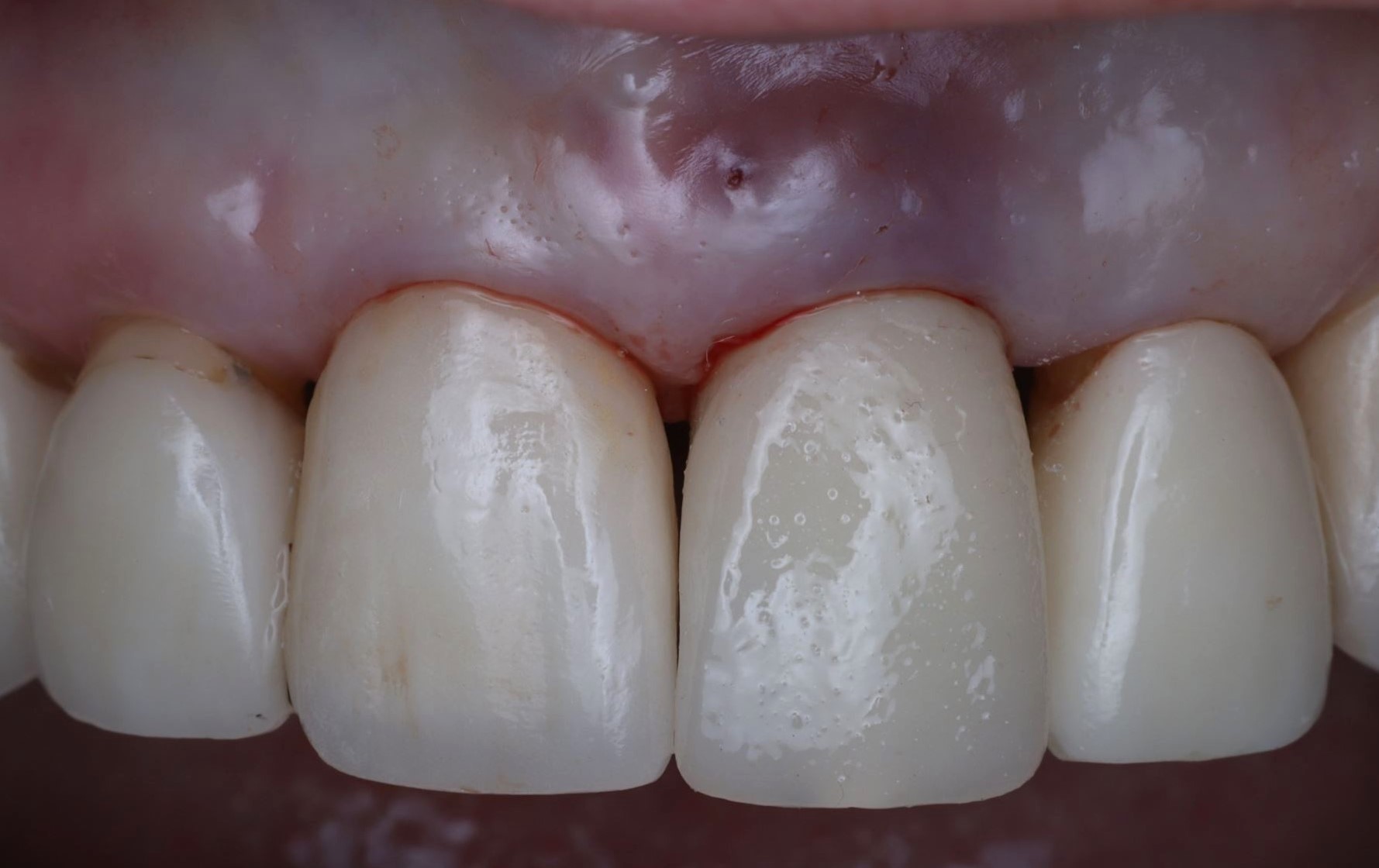
Same-day tooth replacement: A cracked upper front tooth that could not be saved was removed, and an implant, bone graft, and temporary crown were placed in the same visit.
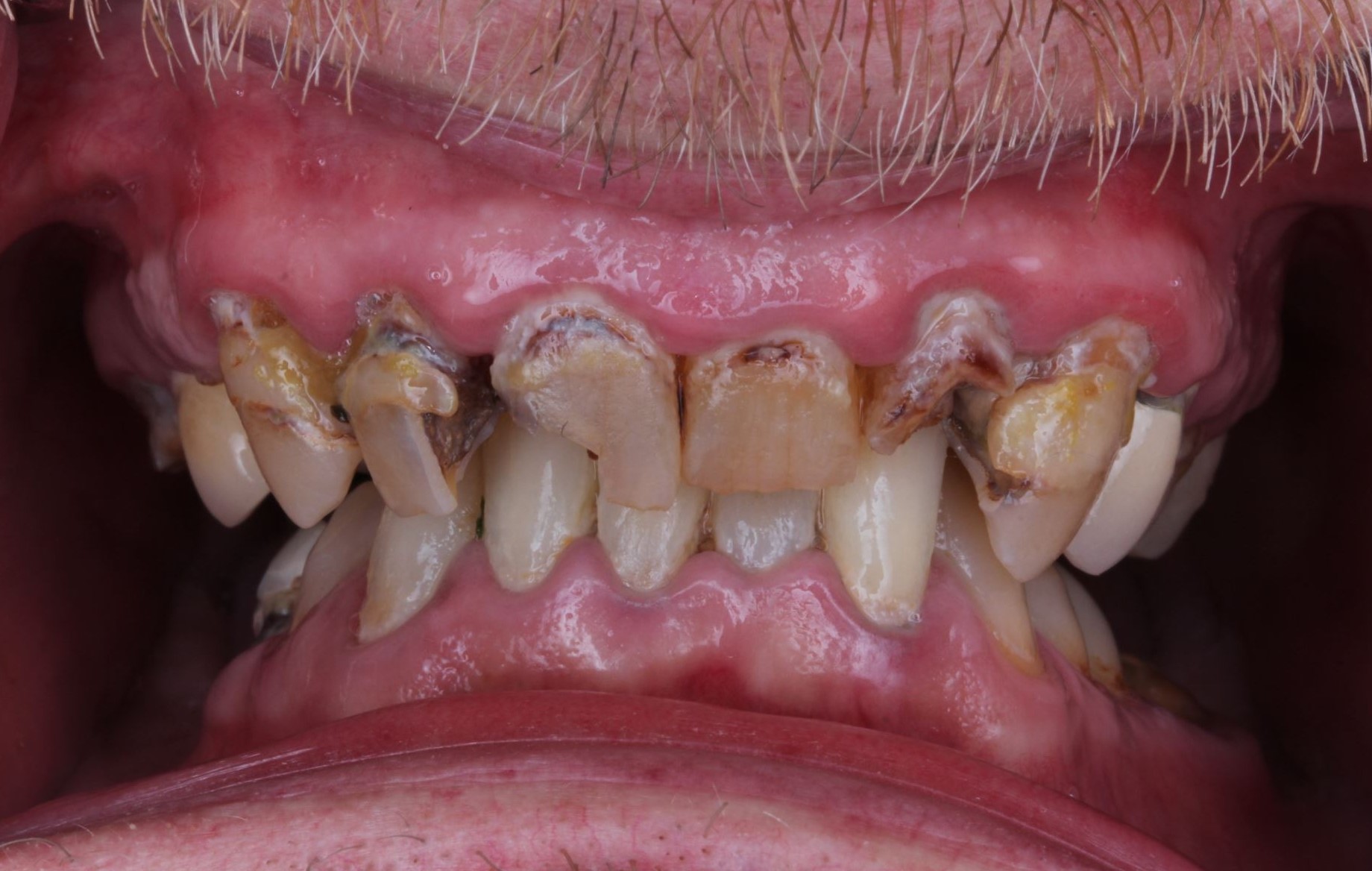
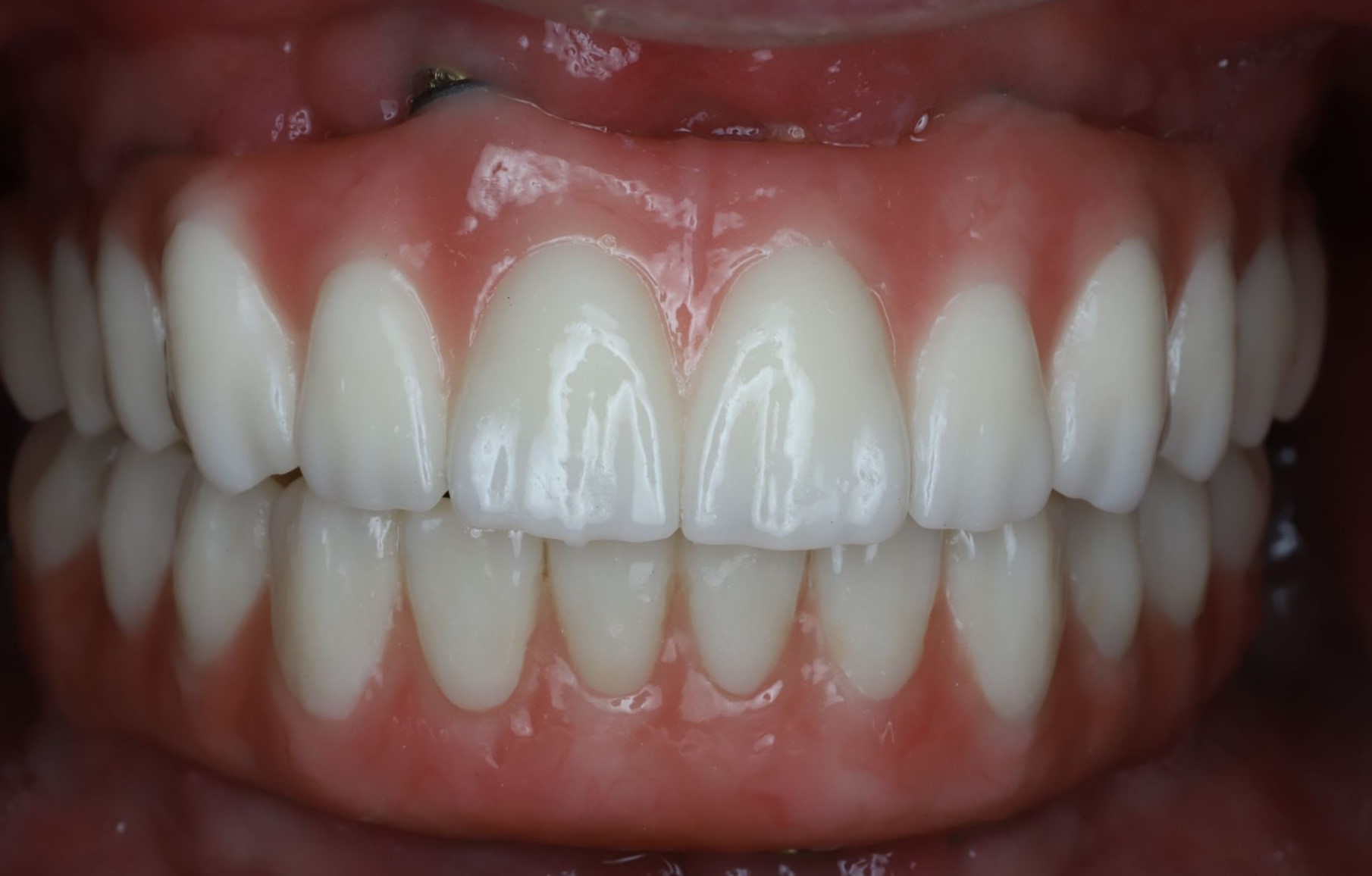
Full-mouth transformation: Severely decayed and failing teeth in both jaws were replaced with fixed upper and lower zirconia bridges supported by dental implants (All-on-X).
Our Advanced, Minimally Invasive Implant Process
Most of the worry we hear is about the unknown. Here is what happens, in order.
Step 1: 3D CBCT Scan & Comprehensive Consultation
We start by making sure your gums and the surrounding bone are healthy enough to support an implant for the long term.
A 3D cone beam (CBCT) scan shows us the available bone, your sinus cavity, and the location of nerves. We can take the scan at your visit, or you can bring a recent one.
We also use a digital intraoral scanner, so there are no messy impression materials. We will review the results with you and tell you honestly whether you are a good candidate. If you need additional procedures first, we will explain why.
Step 2: Precision Surgical Placement & Bone Grafting (If Needed)
Your plan is designed digitally, and when helpful we use a digital surgical guide to place the implant in the exact position planned for your final tooth.
Comfort comes first. Most implants are placed with local anesthesia, just like a filling. If you are anxious, we also offer:
- Oral sedation to help you relax, taken about an hour before your visit
- “Twilight” IV sedation given by a board-certified dental anesthesiologist, so you rest comfortably through the procedure
An appointment for a single implant typically lasts about 90 minutes, and the placement itself takes around 30 minutes. We close the site with dissolvable stitches.
If bone has shrunk over time, we may add a bone graft or perform a sinus lift. When it is safe, we plan the extraction, implant, and graft in a single visit to shorten your total healing time.
Step 3: Healing & Osseointegration
Your implant needs about 3 to 4 months to fuse with the bone. During the first two weeks, keep the surgical site undisturbed: do not brush it or chew on that side.
Most patients manage any soreness with ibuprofen or acetaminophen. We rarely need to prescribe stronger medication. You do not need a liquid or soft-food diet, so eat what you like on the other side of your mouth.
Step 4: Your Custom Crown & Long-Term Care
Once the implant has integrated, your dentist takes a digital or traditional impression, and a high-quality dental lab we partner with makes your crown or bridge. We coordinate with your dentist throughout.
After your restoration is placed, we check the fit and your bite. Implants cannot get cavities, but they can develop gum disease. Regular cleanings and good home care protect your investment.
If problems do arise, our periodontists also treat peri-implantitis, the disease of dental implants.
Dental Implant Insurance, Financing & Costs
We want cost to be a clear part of the conversation, not a surprise. We will review your options with you at your consultation.
- Insurance: We are in network with Delta Dental and accept all PPO insurance plans. Coverage for implants varies by plan, so our team will help verify your benefits.
- Financing: We offer in-house financing and CareCredit, so treatment can fit your budget.
- Your total cost depends on the number of implants, whether bone grafting is needed, your sedation choice, and the final restoration.
Frequently Asked Questions About Dental Implants
Is getting a dental implant painful?
The area is fully numbed so you will not feel any pain during the procedure, and you can choose sedation if you would like. Afterward, most patients describe soreness that is manageable with over-the-counter medication.
How long does the whole dental implant process take?
Plan on roughly 3 to 4 months of healing before your final crown. Your timeline depends on whether grafting is needed. In suitable cases, you can leave surgery with a temporary tooth the same day.
I lost my tooth years ago. Is it too late for an implant?
Not necessarily. Bone can shrink after tooth loss, but grafting often rebuilds enough support. This is where a periodontist’s surgical training matters most.
How long do dental implants last?
With good hygiene and regular maintenance, implants can last many years, often decades. Keeping the gums and bone around them healthy is the key.
Do you accept my insurance for dental implants?
We are in network with Delta Dental and accept all PPO plans. We also offer in-house financing and CareCredit. Call us and we will help you understand your benefits.
Will you work with my regular dentist?
Yes. We place the implant, and your dentist typically makes the final crown. We keep each other informed at every stage.
What is the difference between an implant-supported denture and a fixed full arch?
An implant-supported denture snaps onto implants and can be removed for cleaning. A fixed full arch is attached to the implants and stays in place. Fixed teeth feel closest to natural teeth, while a snap-on denture usually costs less and is easier to clean.
Schedule Your Dental Implant Consultation
You deserve clear answers and a plan that fits your goals. Your consultation is a chance to ask every question.
or call (714) 637-1600
Orange Periodontics and Dental Implantology
1122 E Lincoln Ave, Suite 209
Orange, CA 92865
Mon–Thu 8:00 AM–4:00 PM | Fri 8:00 AM–2:00 PM
Proudly serving Orange, Anaheim, Anaheim Hills, Fullerton, Tustin, Placentia, Yorba Linda, Santa Ana, Villa Park, and Garden Grove.